

Table of Contents
- What Makes Christian Apparel Ethically Made
- Christian Apparel Supply Chain Transparency: What to Look For
- Ethical Christian Clothing Brands and Their Practices
- Organic Christian Apparel and Material Standards
- Ethical Fashion Certifications That Matter
- How to Verify Ethical Claims Before You Buy
- Balancing Faith, Quality, and Ethical Production
- Frequently Asked Questions
Last Updated: October 10, 2026
What Makes Christian Apparel Ethically Made
Ethically made Christian apparel means clothing produced with respect for workers, the environment, and honest business practices.
Many brands claim to be "ethical" without backing it up. Others invest in fair wages and sustainable materials but don't disclose it.
Understanding what "ethically made" actually means matters before you buy.
Here's what separates genuine ethical production from greenwashing:
- Fair wages, Workers earn living wages, not poverty wages
- Safe conditions, Facilities meet basic safety and health standards
- Transparent supply chains, You can trace where materials come from
- Sustainable materials, Organic cotton, recycled fibers, or responsibly sourced alternatives
The challenge: many brands excel in one area but fail in others.
Christian Apparel Supply Chain Transparency: What to Look For
Transparency is the foundation of ethical production. If a brand won't disclose where things are made or how, that's a red flag. Knowing where to look and what constitutes real disclosure versus marketing language is critical.
Where Transparent Brands Publish Supply Chain Information
Reputable brands make this information accessible without requiring you to email customer service. Look for:
Dedicated sustainability or ethics pages: Transparent brands maintain a section (labeled "Our Impact," "Sustainability," "Ethics," or "About Our Production") detailing sourcing, manufacturing, and labor practices. This should be easy to find from the homepage.
Material sourcing documentation: Look for statements about where cotton is grown, whether it's certified organic, and how fibers are sourced.
Third-party audit reports or summaries, Transparent brands often publish summaries of independent audits (even if they don't release full reports).
Production timelines and capacity information: Brands that disclose production volume and timelines signal confidence. Vague timelines can hide rushed manufacturing.
How to Evaluate the Quality of Transparency Claims
Not all disclosures are equally credible. Use these criteria to assess what you find:
Specificity over generality: "We prioritize fair labor" is marketing. "Our facilities pay workers 150% of the local minimum wage and conduct independent audits quarterly" is transparency. Specific claims are verifiable.
Named third parties, If a brand claims to be audited, they should name the auditing organization.
Dates and recency, Transparency should be current. An audit from 2022 may no longer reflect actual conditions.
Acknowledgment of challenges: Transparent brands discuss areas for improvement and supply chain trade-offs rather than claiming perfection.
Accessible documentation, Can you actually access the information you need, or is it locked behind a PDF download, a customer service email, or a paywall?
Print-on-Demand vs. Traditional Manufacturing: Transparency Trade-Offs
Production method affects what transparency looks like and what it guarantees.
Print-on-demand production reduces overproduction waste but doesn't guarantee ethical labor at the printing facility. Ask the brand: "Which print facility do you use, and are they independently audited?"
Traditional batch or made-to-order production creates inventory upfront with waste risk if items don't sell. Transparent brands should disclose inventory management and what happens to unsold stock.
Red Flags in Supply Chain Disclosure
Certain responses or lack thereof should prompt you to dig deeper or reconsider:
- "We source from ethical suppliers" without naming them or providing audit evidence
- Vague country-level sourcing ("made in Vietnam") without facility names
- No response to direct questions about factory locations, wages, or audits
- Outdated or missing sustainability pages that haven't been updated in over a year
Transparency isn't optional for ethical production, it's the mechanism that allows you to verify claims. Brands that welcome scrutiny have nothing to hide.
Ethical Christian Clothing Brands and Their Practices
Understanding Production Methods
How Christian apparel gets made directly affects its ethical footprint. There are three main production approaches, each with different implications.
Made-to-order production eliminates excess inventory and waste while allowing quality control on individual pieces. The trade-off: longer wait times and higher prices.
Chrimsan Christian Clothing LLC uses made-to-order production for all pieces. Each item is crafted specifically for you. All items ship within 14 days.
Worker Welfare and Fair Labor Standards
Fair wages are non-negotiable in ethical production. Workers should earn enough to meet basic needs without excessive hours.
Look for these specific indicators:
- Named facilities, Not anonymous factories
- Third-party audits, Independent verification of conditions
- Wage transparency, Clear statements about compensation practices
- Worker voice, Evidence that employees can raise concerns safely
- No child labor, Strict age verification policies
Brands that can't or won't provide this information are cutting corners somewhere. The most ethical brands invite scrutiny because they have nothing to hide.
Organic Christian Apparel and Material Standards
Organic cotton is grown without synthetic pesticides or fertilizers, protecting soil health and farm workers. It's a meaningful improvement over conventional cotton.
Other sustainable materials worth considering:
- Recycled polyester, Diverts plastic from landfills and reduces new petroleum extraction
- Hemp, Requires minimal pesticides and regenerates soil
- Linen, Biodegradable and requires less water than cotton
- Tencel, Made from sustainably managed wood with closed-loop dyeing
Combine sustainable materials with ethical manufacturing. A shirt made from organic cotton in exploitative conditions isn't truly ethical; a recycled-polyester piece from a facility with excellent labor practices is better.
When evaluating materials, check whether the brand specifies fiber content clearly and explains why they chose those materials. Vague descriptions like "quality fabrics" hide important details.
Christian Graphic Tee — I Follow Jesus | Chrimsan →
Ethical Fashion Certifications That Matter
Certifications provide third-party verification but vary in rigor. Understanding what each covers, and what it doesn't, is essential.
Major Certifications and Their Scope
Fair Trade Certified (Fair Trade USA or Fair Trade International)
- What it covers: Fair wages, safe working conditions, community investment, and worker rights
- What it doesn't cover: Environmental impact; chemical safety; full supply chain transparency
- How to verify: Search the Fair Trade USA directory by brand or facility
- Limitation: Focuses on labor and community benefit but doesn't audit the full supply chain
GOTS (Global Organic Textile Standard)
- What it covers: Organic fiber content (95%+), chemical safety, labor conditions, and environmental practices
- What it doesn't cover: Living wage verification; end-of-life disposal
- How to verify: Search gots.org directory
- Limitation: Comprehensive but expensive, so smaller brands may not pursue it
B Corp Certification (B Lab)
- What it covers: Labor, environmental impact, community engagement, transparency, and accountability
- What it doesn't cover: Specific supply chain audits; detailed wage verification
- How to verify: Search bcorporation.net directory
- Limitation: Broad and depends on company self-reporting
SA8000 (Social Accountability International)
- What it covers: Labor conditions, health and safety, freedom of association, and worker grievance mechanisms
- What it doesn't cover: Environmental impact; material sourcing; living wages
- How to verify: Search saasaccreditation.org directory
- Limitation: Facility-focused; a brand might have one certified factory but source from uncertified ones elsewhere
OEKO-TEX Standard 100
- What it covers: Chemical safety in finished textiles
- What it doesn't cover: Labor practices; environmental impact; fair wages; supply chain transparency
- How to verify: Check the OEKO-TEX product database
- Limitation: A product safety standard, not an ethical production standard
The Gaps Between Certifications: What They Don't Tell You
No single certification covers all dimensions of ethical production. Here's what typically falls through the cracks:
Environmental impact beyond materials: Most certifications verify materials but few audit full environmental footprint. Dyeing and finishing consume water and energy; GOTS addresses this better than others.
Living wages vs. legal minimum wages: Many certifications only require compliance with local labor laws. In low-wage countries, "legal" doesn't mean "livable."
How to Verify That a Brand Actually Holds a Certification
Brands sometimes claim certifications they don't have or exaggerate their scope. Here's how to verify:
Check the official directory: Visit the certifying organization's official directory and search for the brand or facility. If it's not listed, the certification doesn't exist or has expired.
Look for the official label or certificate number: Legitimate certifications display specific labels or certificate numbers traceable to the certifying body.
Ask for proof: Email the brand for their certification number and a link to their official directory listing. Brands that won't provide this may be misrepresenting their status.
Check the certification scope: Some brands hold certifications for only part of their product line. Ask which products are certified.
What to Look For When Certifications Are Missing
Not all ethical brands hold formal certifications. Some are too small, too new, or operating in regions where certification infrastructure is limited. If a brand lacks certifications, look for:
- Detailed supply chain disclosure (facility names, locations, audit reports)
- Transparent wage and labor practice statements
- Third-party audits even if not formally certified
- Membership in ethical fashion organizations or industry groups that set standards
- Willingness to answer detailed questions about their practices
The Bottom Line on Certifications
Certifications are useful signals but not complete guarantees. The most ethical brands combine multiple certifications or supplement them with detailed transparency disclosures. Ask: "What certifications do they hold, what do they verify, and what gaps remain?"
How to Verify Ethical Claims Before You Buy
Questions to Ask Christian Apparel Brands
- Where is this item made?, Ask for the specific factory or production facility, not just a country.
- Who manufactures it?, Get the company name and location.
- What certifications do you hold?, Ask for proof of third-party verification.
- What materials are used?, Request detailed fiber content and sourcing information.
- How are workers compensated?, Ask about wage practices and working conditions.
- How long does production take?, Understanding timelines reveals whether they're rushing or allowing quality work.
- What happens to unsold inventory?, Do they donate, recycle, or discard excess stock?
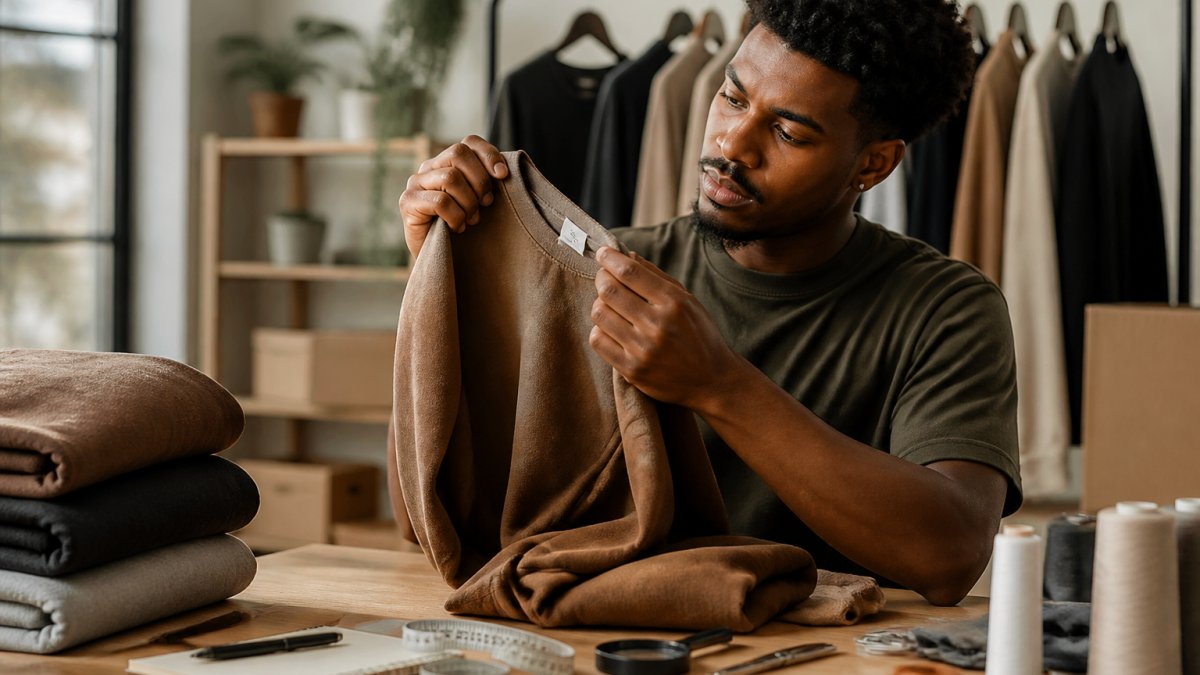
Red Flags and What They Mean
Certain responses should make you pause before buying.
"We source from ethical factories" without naming them: Vague and unverifiable. Ask for specific facility names.
"All our materials are sustainable" without certifications, Anyone can claim this. Demand proof.
"We're working on transparency": This suggests they lack it now.
Extremely low prices: If priced significantly below competitors, ask how. Are they cutting corners on labor or materials?
Claims about "artisanal" or "handmade" without details: These words mean nothing without specifics about who's making it and compensation.
Balancing Faith, Quality, and Ethical Production
Balancing faith, quality, and ethics isn't always easy. Sometimes the most affordable option isn't the most ethical.
Premium ethical production costs more. Fair wages, sustainable materials, and quality control increase per-unit costs. Brands claiming ethics at mass-market prices likely cut corners.
When you buy from Chrimsan Christian Clothing LLC, you're investing in pieces made specifically for you with quality materials. The I Follow Jesus Tee is crafted from 100% combed cotton, pre-shrunk and designed to last.

The production timeline (up to 14 days) reflects genuine craftsmanship.
Choosing ethical Christian apparel means asking hard questions before you buy and looking beyond marketing claims to verify actual practices. Start with our I Follow Jesus Statement Bundle to experience the difference that quality and intention make.

Frequently Asked Questions
How can you tell if Christian apparel is ethically made?
Check for supply chain transparency: ethical brands disclose where and how garments are made. Look for third-party certifications like Fair Trade or B Corp, ask about labor practices and worker wages, verify material sourcing (organic cotton, recycled fibers), and request documentation on factory conditions. Brands that hesitate to answer these questions are a red flag. Ask directly: Where are these made? Who makes them? What certifications do you have?
What certifications should you look for in ethical Christian apparel?
Fair Trade Certified, B Corp Certified, GOTS (Global Organic Textile Standard), and OEKO-TEX are the most credible. These verify labor standards, environmental practices, and material safety. Some brands use proprietary audits, but third-party certifications are more trustworthy because independent organizations verify the claims. Not every ethical brand holds every certification, but at least one recognized credential signals serious commitment. Ask which certifications a Christian apparel brand maintains and why they chose those specific ones.
Is organic cotton enough to make Christian apparel ethical?
Organic cotton addresses environmental impact and chemical safety, but it doesn't guarantee ethical labor practices or fair wages. A brand could use organic cotton sourced from factories with poor working conditions. True ethical apparel combines organic or sustainable materials with transparent labor practices, fair wages, safe working conditions, and supply chain accountability. Look for brands that disclose both their materials and their manufacturing partners. Organic material is one piece of the puzzle, not the whole picture.
What should ethical Christian clothing brands disclose to customers?
Ethical brands should openly share: manufacturing locations and factory names, labor standards and wage practices, material sourcing and certifications, environmental practices (water use, dyeing processes, waste management), and how they verify these claims. They should explain their production timeline and whether items are made-to-order or mass-produced. Transparency builds trust. If a Christian apparel brand can't or won't answer questions about these areas, that's a signal to shop elsewhere.